Oral Surgery
Specialist Surgical Care Without the Hospital Wait

Why wait months for treatment?
If you’ve been told you need a wisdom tooth removed or a surgical extraction, the wait for an NHS appointment can be a long one. In our area, the current wait for wisdom tooth extraction is around 18 months. That’s a long time to cope with toothache, swelling, disturbed sleep and the worry that an infection will flare up again.
Having your oral surgery at Albert Road Dental can cut that wait to weeks. You’ll see an experienced clinician, have your treatment planned properly and get the problem dealt with while it’s still affecting you, rather than a year and a half down the line.
We understand that choosing private treatment is a big decision. That’s why we’ll always give you a clear explanation of your options and costs before you commit to anything, with no pressure. You can see our private fee list for more information.

Oral surgery with Dr T.J. Horgan
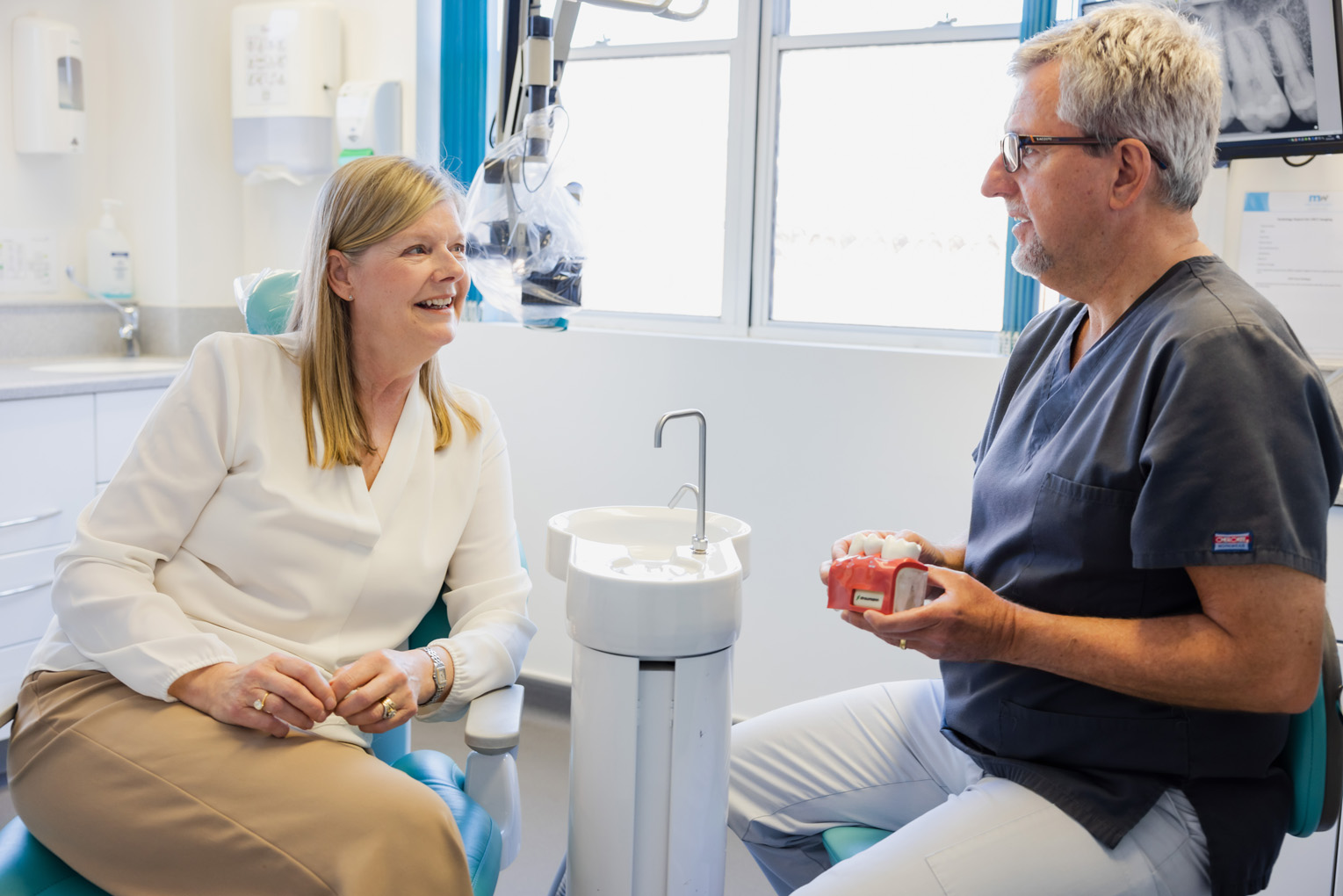
Our oral surgery treatments are provided by Dr T.J. Horgan, who has a special interest in oral surgery. T.J. is a dual-qualified dentist and medical doctor, and his background includes several hospital posts in Oral and Maxillofacial Surgery. This gives him valuable experience in managing more complex cases safely.
T.J. is also a Specialist Endodontist, so he understands teeth inside and out. Patients tell us that what matters most is feeling listened to. He particularly enjoys looking after nervous patients and takes the time to explain your diagnosis and options so you feel informed and involved throughout.
Our oral surgery treatments
Surgical extraction
Most teeth can be removed with a straightforward extraction. Sometimes, though, a tooth is broken down, has curved or fragile roots, or is firmly held in the bone, and a more careful approach is needed.
A surgical extraction is used when a tooth can’t be removed easily using conventional techniques. This may involve making a small incision in the gum, removing a little of the surrounding bone, or dividing the tooth into sections so it can be taken out safely. It sounds more involved than it is, and the aim is always to keep the procedure as gentle and predictable as possible.
If you need a simpler removal, take a look at our tooth extractions page.
Wisdom tooth removal
Wisdom teeth (third molars) are the last to arrive, often in our late teens or twenties, and they don’t always have enough room. They can become impacted (trapped beneath the gum or against another tooth) or only partially erupt, which makes them hard to clean.
You might need a wisdom tooth removed if it is causing pain, repeated infections or swelling, or damaging the tooth next to it. Depending on the position of the tooth, removal may need a minor surgical procedure. We’ll examine the tooth carefully, talk through your options and only recommend removal when it’s the right choice for you.
If you’ve been referred for NHS wisdom tooth removal and are facing a long wait, we’re happy to see you sooner. Delaying treatment can mean repeated infections and a greater risk of damage to neighbouring teeth, so it’s worth getting it looked at promptly.
Coronectomy of wisdom teeth
Sometimes the roots of a lower wisdom tooth sit very close to the nerve that gives feeling to your lower lip and chin. Removing the whole tooth in this situation could risk injuring that nerve.
A coronectomy is a surgical technique where only the crown of the tooth is removed, and the roots are left in place. This reduces the risk of nerve damage while still dealing with the part of the tooth causing the problem. If a scan shows your wisdom tooth is close to the nerve, we’ll discuss whether a coronectomy is the safest route for you.
Expose and bond
Occasionally, a tooth doesn’t come through the gum on its own. This most often affects the canines (the pointed teeth towards the front of the mouth) and it is commonly picked up during orthodontic treatment.
Expose and bond is a minor surgical procedure carried out alongside braces or aligners. The gum is gently lifted to uncover the tooth, and a small orthodontic bracket and chain are attached. Your orthodontist can then guide the tooth gradually into its correct position. It’s a great way to bring a hidden tooth into your smile.
You can read more about adult orthodontics and children’s orthodontics on our website.
When might you need oral surgery?
Don’t wait for it to get worse. You may want to book an appointment if you notice:
- Ongoing pain or swelling around the back of your mouth
- A tooth that has broken below the gum line
- Repeated gum infections around a wisdom tooth
- Difficulty opening your mouth or discomfort when chewing
- A tooth that hasn’t appeared when you’d expect it to
If you have a dental emergency, please see our emergency dentistry page or call us on 01386 442207.

What to expect at your appointment
We always start with a conversation. We’ll ask about your symptoms and medical history, examine the area and, where needed, take x-rays or scans so we can plan your treatment properly.
You’ll then have the chance to ask questions and talk through your options, including the benefits and risks of each, before you decide how to proceed. Treatment is carried out under local anaesthetic, so the area is numbed. We’ll explain what’s happening as we go and answer any questions along the way. Afterwards, we’ll give you clear aftercare advice and we’re always on the end of the phone if you have any concerns.
Calm, friendly care for nervous patients
If you’re in Evesham, Pershore, Broadway, Chipping Campden or the surrounding Worcestershire areas, you don’t have to wait months to get your teeth sorted. Call us on 01386 442207 or book a consultation and we’ll find an appointment that suits you.